

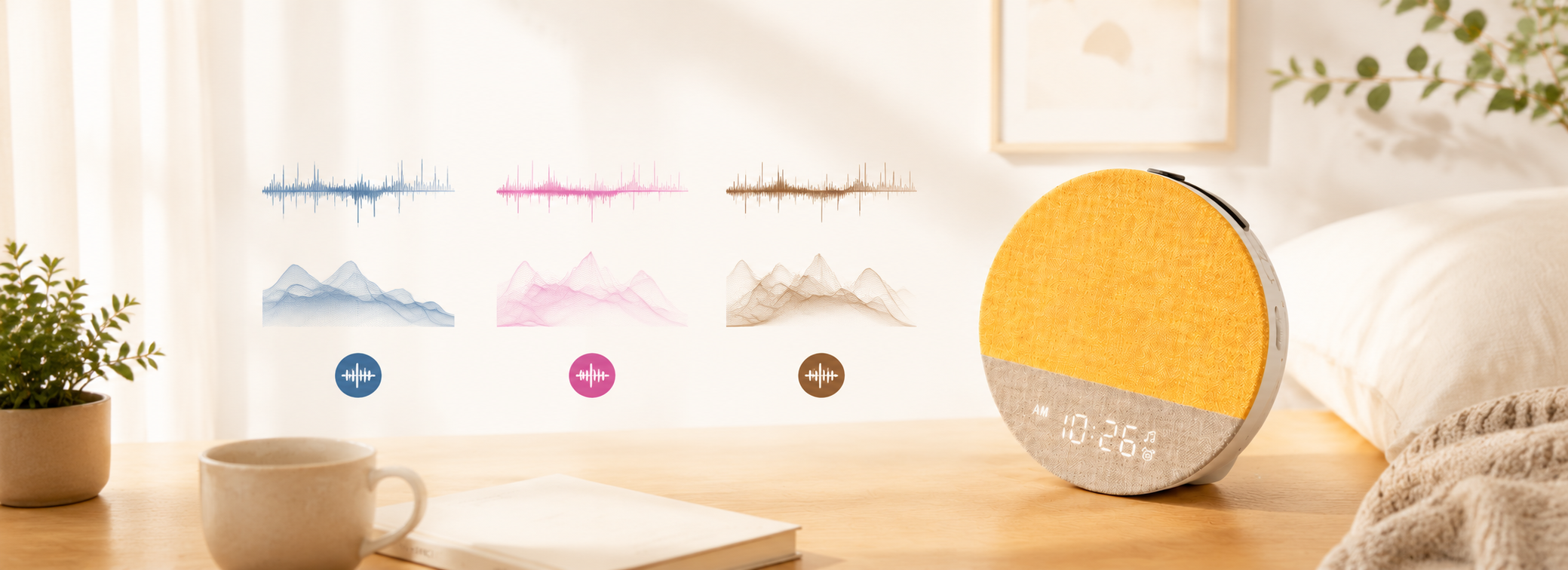
White noise, pink noise, and brown noise are often grouped together, but they do not sound the same. Each distributes sound energy differently, which changes whether it feels bright, balanced, soft, or deep.
This guide compares the three sound colors in plain language so you can understand their differences and test the option that best fits your room, routine, and listening preference.

White Noise vs Pink Noise vs Brown Noise at a Glance
| Sound color | How it is balanced | How it may sound | Useful starting point |
|---|---|---|---|
| White noise | Energy is spread evenly across frequencies | Bright, steady, similar to radio static or a strong fan | Rooms with changing background sounds |
| Pink noise | Higher frequencies are reduced | Softer and more balanced, similar to steady rain | Listeners who find white noise too bright |
| Brown noise | Lower frequencies are emphasized more strongly | Deep and bass-heavy, similar to a low rumble | Listeners who prefer a fuller, lower sound |
These descriptions are comparisons, not rules. Speaker size, volume, room surfaces, and personal preference can all change the way a sound feels.
What Is White Noise?
White noise combines frequencies across the audible range at equal energy. Because the higher frequencies remain noticeable, it usually sounds brighter than pink or brown noise.
A steady white-noise background can make changes in the surrounding soundscape feel less prominent. It may be a practical option for bedrooms near hallways, traffic, shared walls, or other inconsistent sounds.
If you want to compare white noise with fan sounds and nature-inspired options, browse the Dreamegg sound machines collection.
What Is Pink Noise?
Pink noise also covers a broad range of frequencies, but its energy decreases as frequency rises. The result is often perceived as softer and less hiss-like than white noise.
Rainfall, wind through leaves, and some ocean-like recordings are frequently used to describe its character, although natural recordings are not always technically pure pink noise.
Pink noise may suit someone who wants a steady background but finds the brighter edge of white noise distracting.
What Is Brown Noise?
Brown noise, sometimes called red noise, places even more emphasis on lower frequencies. It tends to sound deeper and heavier than both white and pink noise.
Some listeners enjoy its low, smooth character; others may find it too bass-heavy. Small speakers may also reproduce it differently from larger bedside devices, so it is worth testing on the device you plan to use.
Which Sound May Fit Your Preference?
Start with white noise if…
- You prefer a crisp, steady sound.
- Your room contains changing or higher-pitched background noises.
- You already like the sound of a fan or air conditioner.
Start with pink noise if…
- You want a softer balance than traditional white noise.
- You enjoy rain-like or gently textured sounds.
- Bright static feels too sharp at your preferred volume.
Start with brown noise if…
- You prefer deeper, lower-frequency sound.
- You want less high-frequency hiss.
- Your speaker reproduces bass clearly without vibration or distortion.
How to Compare Sound Colors at Home
- Use the same device. Different speakers can make the comparison misleading.
- Begin at a comfortable low volume. Increase only if needed for your environment.
- Keep the placement consistent. Put the device on a stable surface with open space around the speaker.
- Try one sound at a time. Give yourself enough time to notice whether the tone feels pleasant or distracting.
- Save your preferred settings. A repeatable setup is more useful than changing sounds every night.
The goal is not to find a universally “best” sound. It is to find a sound you are comfortable using as part of a consistent environment.
Dreamegg Options for Comparing Sounds
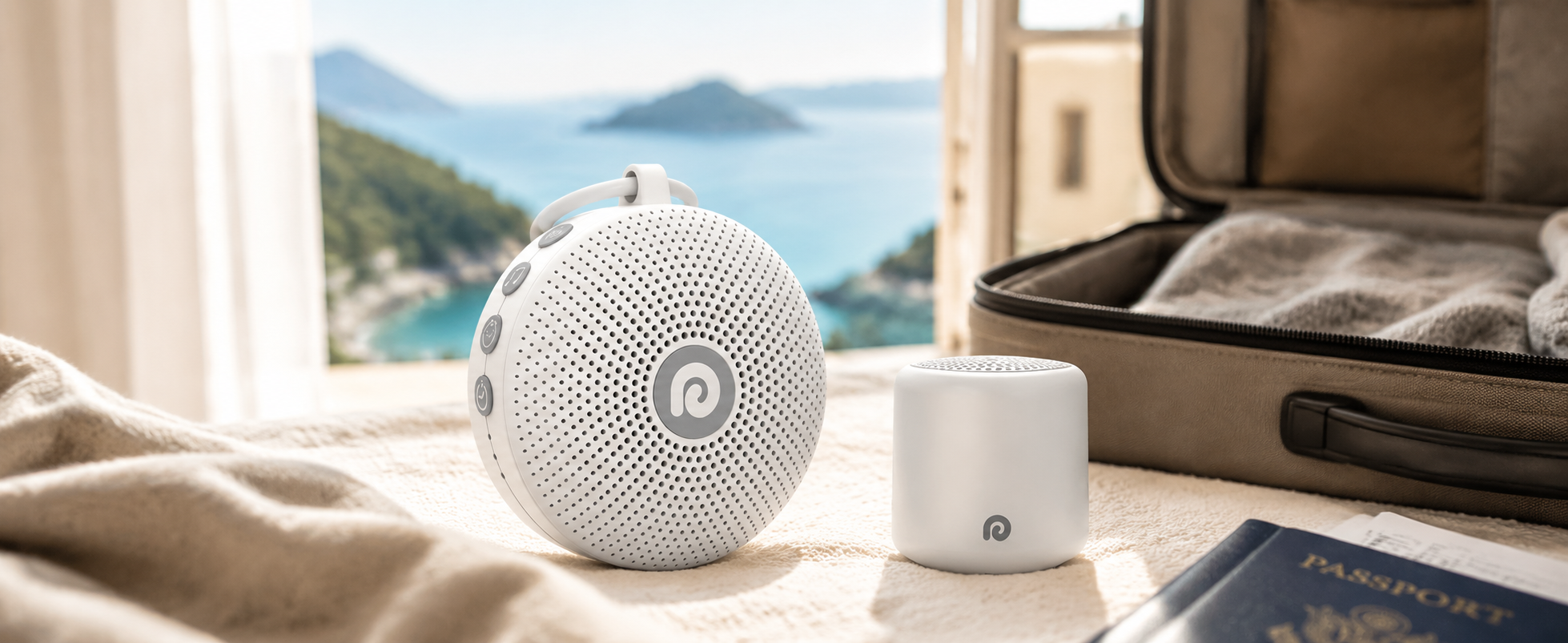
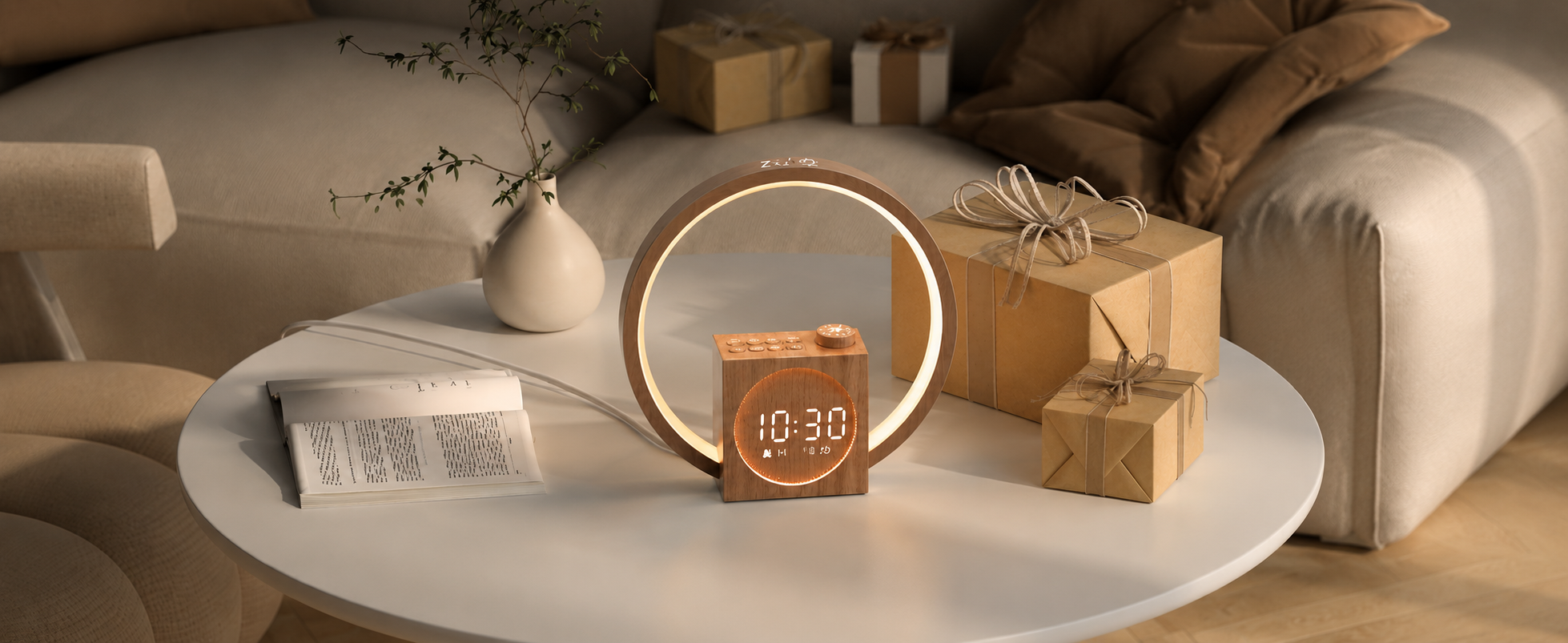
For a steady bedside setup, the Classic D1 sound machine offers multiple sound choices in a straightforward format. For a smaller rechargeable option, the Lite D11 Max portable sound machine is designed for flexible use at home or away.
If portability is your main priority, read our guide to choosing a portable white noise machine for travel.
Frequently Asked Questions
Is white noise louder than pink or brown noise?
Not necessarily. All three can be played at the same measured level, but white noise may feel brighter because it contains more noticeable high-frequency energy.
Can one sound machine include all three colors?
Many multi-sound devices include white, pink, and brown noise or closely related variations. Check the individual product’s sound list before choosing.
Should I leave the sound on continuously?
That depends on your routine and device settings. Some people prefer continuous sound, while others use a timer. Follow the product instructions and choose a comfortable setup.
Which noise color is best for sleep?
There is no single answer for every listener. White, pink, and brown noise differ mainly in frequency balance, so personal comfort, room conditions, speaker quality, and volume all matter.
Choose by Preference, Not Promises
White noise is the brightest and most even, pink noise is softer and more balanced, and brown noise has the deepest character. Use those differences as a starting point, then listen and compare in your own space.
A sound you enjoy at a comfortable volume—and can use consistently—is usually a better choice than one selected only because it is currently popular.
Share:
Circadian Rhythm and Sleep Stages: A Simple Guide