

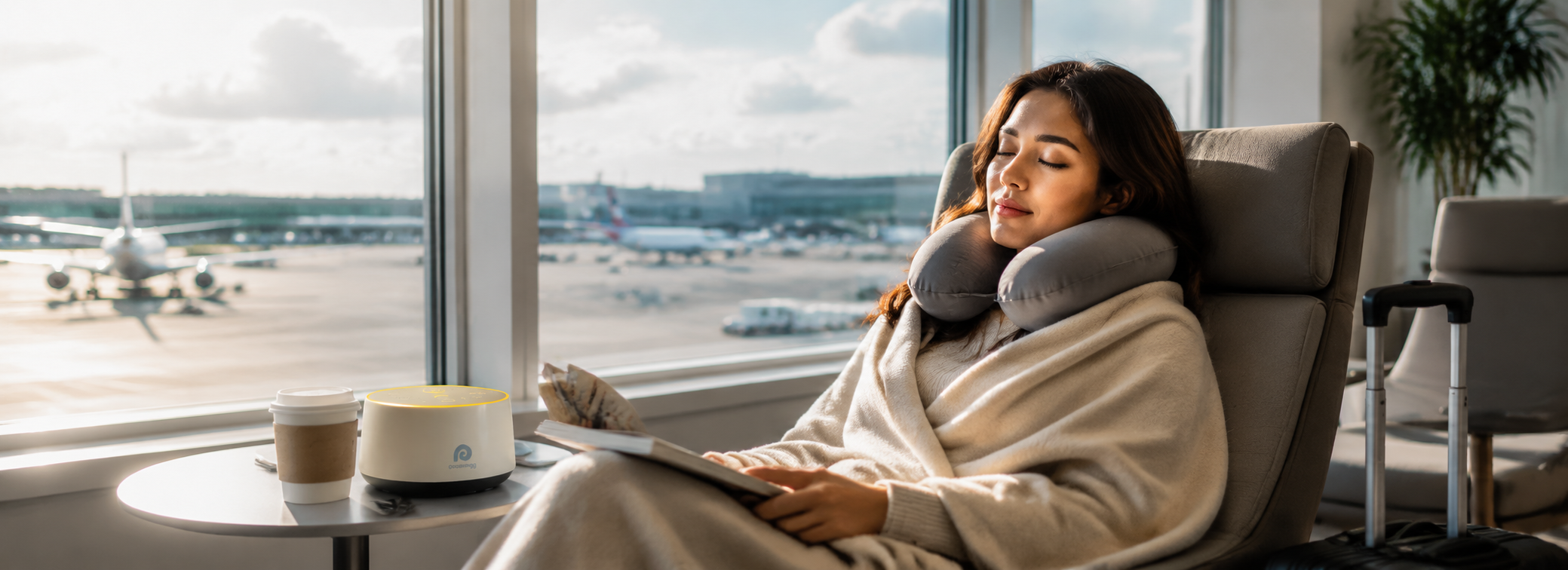
Travel changes the details that usually make bedtime feel familiar: the room, sounds, light, schedule, and even where your essentials are stored. A useful travel routine does not try to recreate home perfectly. It keeps a few recognizable cues while adapting to the trip.
This guide covers practical preparation for hotels, flights, schedule changes, family travel, and packing. If you are comparing product features such as size, charging, battery, and sound options, use our separate guide on how to choose a portable white noise machine for travel.

Before You Travel: Keep the Routine Portable
Write down the smallest version of your normal evening routine. It might be closing the curtains, changing clothes, reading for ten minutes, and selecting a familiar background sound. These steps are easier to repeat than an elaborate routine that depends on a particular room.
- Charge rechargeable devices and download any offline content.
- Pack essential cables and the correct destination adapter.
- Keep an eye mask, medication, and other important personal items in carry-on luggage.
- Check airline and accommodation rules for battery-powered devices.
- Avoid testing unfamiliar equipment for the first time after arriving late.
Hotel Sleep: Make the Room Easier to Use
Before unpacking everything, check the room from the bed. Look for hallway light, bright electronics, direct air vents, nearby elevators, and anything that may make the space uncomfortable.
- Close curtains and cover only nonessential indicator lights.
- Set frequently used items where you can reach them safely.
- Move luggage and loose cords out of the walking path.
- Choose a comfortable room temperature and bedding layer.
- Set your alarm and prepare the morning before you become tired.
Hotel noise often changes throughout the night. If you prefer a consistent background, explore portable sound machines designed for compact setups.
How to Rest More Comfortably on a Plane
Space is limited on a plane, so focus on comfort, access, and timing. Choose clothing layers that are easy to adjust and keep your eye mask, headphones, water, and neck support in the seat pocket or personal item.
Before using any electronic device, follow crew instructions and airline rules. Keep volume at a comfortable level and avoid creating sound that can disturb nearby passengers.
If you plan to rest, reduce unnecessary screen brightness and interruptions. Set alarms or reminders before settling in so you do not need to repeatedly check the time.
Jet Lag and Time-Zone Changes
After crossing time zones, use the destination schedule as a practical reference for meals, daylight, and bedtime. When possible, begin shifting your schedule gradually before departure instead of changing everything after arrival.
On the first day, keep expectations realistic. Prepare the room early, use local time for your routine, and avoid adding too many new steps. If schedule changes are a frequent concern, our overview of circadian rhythm and sleep stages explains the basic timing concepts without turning them into product claims.
Family Travel: Repeat a Few Familiar Cues
Family travel becomes easier when bedtime items are packed together. A small pouch or packing cube can hold pajamas, a book, a charging cable, and other routine essentials so you do not need to unpack every bag.
Choose a short sequence that can work in hotels, rentals, and relatives’ homes. Keep the routine flexible enough for delays and shared rooms.
When using any sound device around children, follow the product instructions and guidance from an appropriate qualified professional. This article does not set placement, volume, or safety rules for infants or children.
Packing Checklist for a Familiar Nighttime Setup
- Eye mask or compact blackout option
- Travel pillow or familiar pillowcase
- Comfortable clothing layers
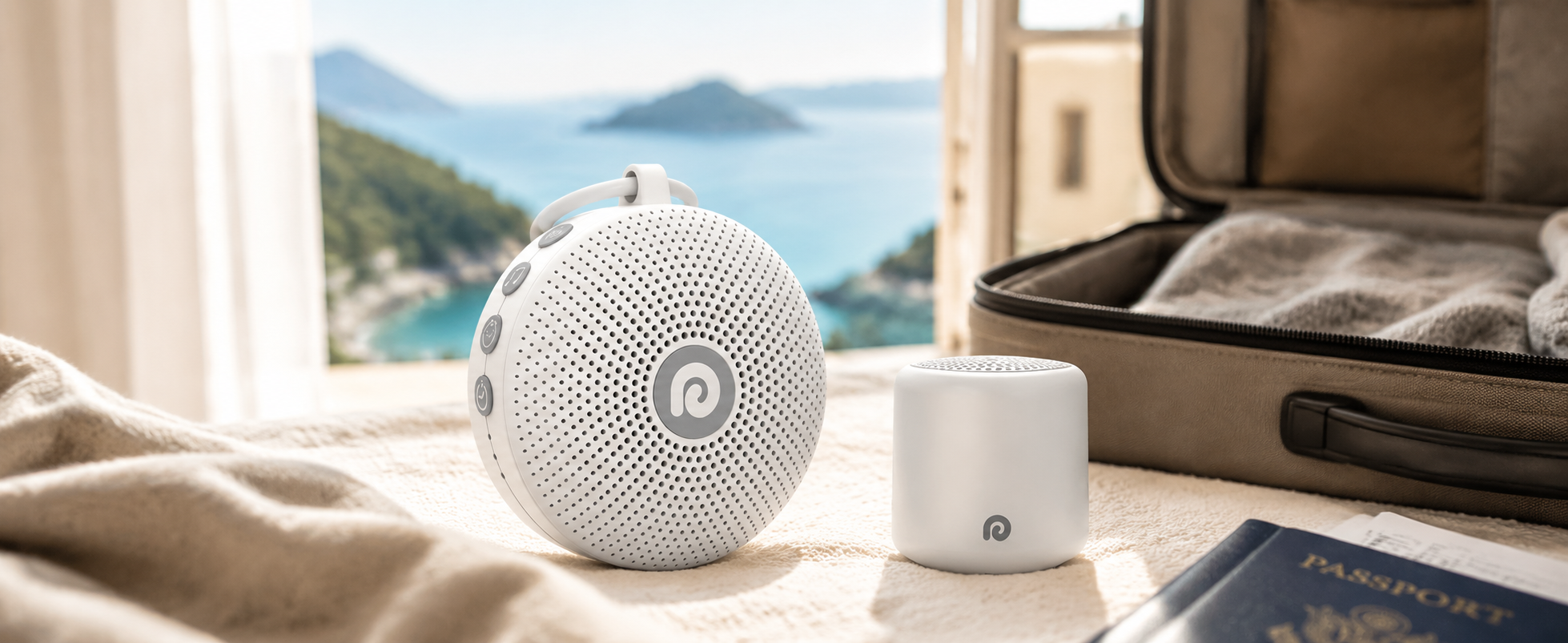
- Portable sound machine and charging cable, if used
- Destination power adapter
- Offline book, audio, or other familiar evening cue
- Small pouch for bedside essentials
For longer trips, the Lite D11 Max portable sound machine is one compact option to review. Check its current product specifications against your charging and packing needs before choosing.
A Simple First-Night Plan
- Inspect the room and clear the walking path.
- Prepare curtains, temperature, bedding, and morning essentials.
- Use a short version of your usual routine.
- Choose familiar sound or quiet according to preference.
- Accept that the first night may feel different without repeatedly changing the setup.
For everyday routine ideas that also work away from home, read better sleep habits around nighttime noise.
Frequently Asked Questions
How can I make a hotel room feel more familiar?
Repeat a few cues from home, place essentials consistently, adjust obvious light and sound distractions, and keep the room easy to move through.
Should I pack a portable sound machine?
It depends on whether you use background sound regularly and whether the device fits your luggage, charging plan, and destination rules. It is optional, not a requirement for travel.
What should stay in carry-on luggage?
Keep irreplaceable or frequently used personal essentials with you. For batteries and electronics, check current airline rules before departure.
How many products should a travel routine require?
As few as practical. A simple routine is easier to repeat across different rooms, schedules, and forms of transportation.
Travel Better with a Repeatable Setup
The most useful travel routine is compact, flexible, and familiar. Prepare the room, keep essentials accessible, adapt to local time, and repeat a few steps that do not depend on being at home.
Products can support that routine, but preparation and consistency do most of the organizational work.
Share:
Circadian Rhythm and Sleep Stages: A Simple Guide
How to Build Better Sleep Habits Around Nighttime Noise